


CFD 26| Leila and the Wolves
You searched for a past event. Please browse our current performances at rialto.com.cy!
Last event date: Monday, April 20 2026 6:00PM
CINEMAS OF DISSENT
Leila and the Wolves
LEM 20/04 > 18:00 | NIC 19/04 > 18:00
90’, 1984, UK, Lebanon
Directed by
Heiny Srour
Screenplay
Heiny Srour
Cinematography
Curtis Clark
Charlet Recors
Editing
Eva Houdova
Music
Zaki Nassif
Sound
Eddy Tise
John Anderton
Sabah Jabbour
Emile Saade
Henri Morelle
Cast
Nabila Zeitouni
Rafic Ali Ahmed
Producer
Heiny Srour
Production companies
The British Film Institute
Leila Films
The Ministry of Culture (Belgium)
NCO and NOVIB
Lebanese Ministry of Tourism
Swedish International Development Authority
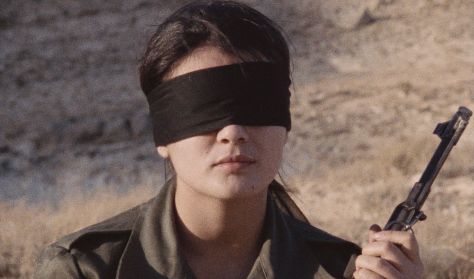
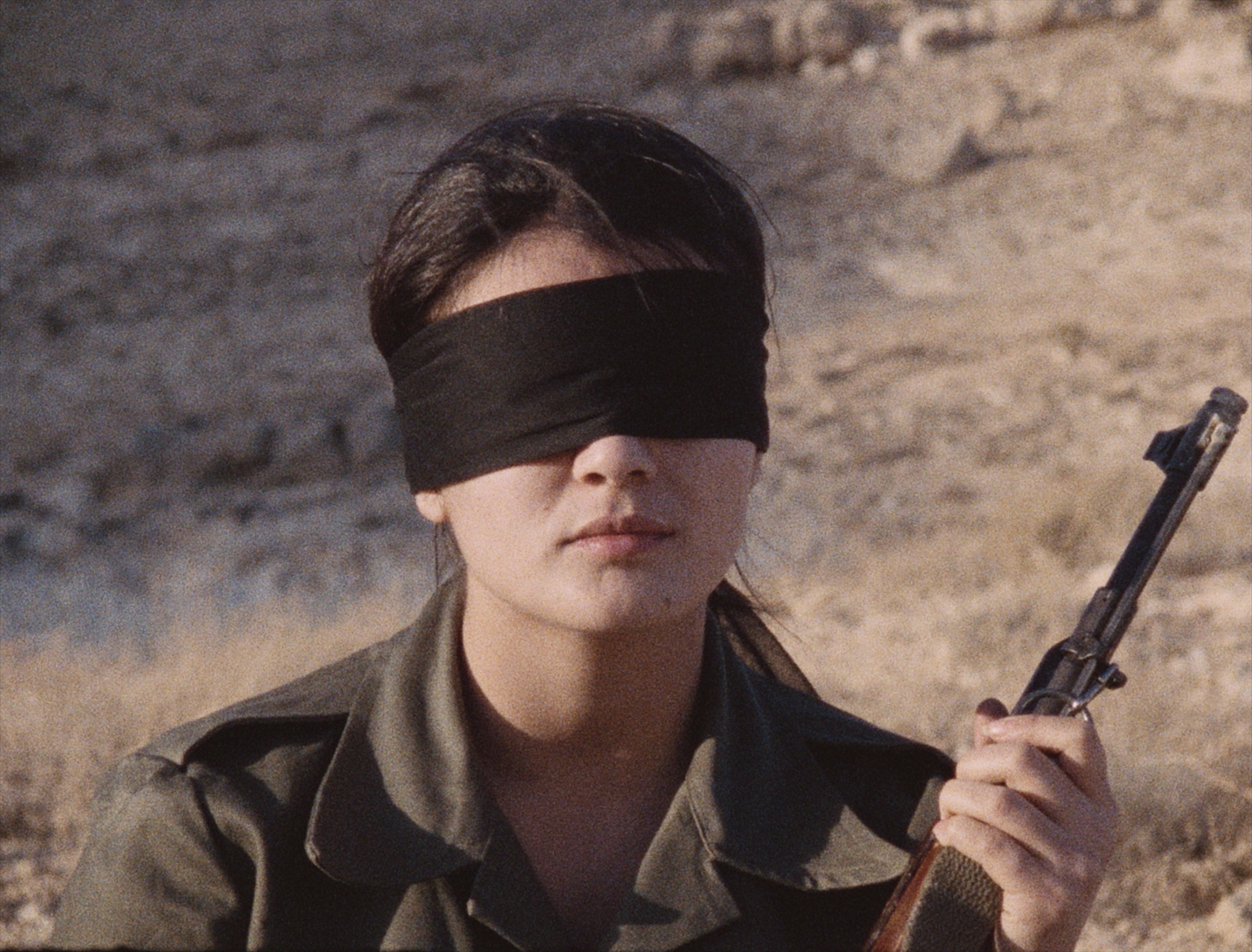
In present-day London, a Lebanese woman is staging a photography exhibition where women are the unsung heroines and martyrs of political conflict. She time-travels through the 1900s to the 1980s, wandering through real and imaginary landscapes of Lebanon and Palestine.
Born in 1945 in Beirut, Heiny Srour studied Sociology at the French University of Beirut and went on to study Social Anthropology at the Sorbonne in Paris. In 1969, while pursuing a PhD on the status of Lebanese and Arab women and working as a journalist for AfricAsia magazine, she discovered the struggle of the Popular Front for the Liberation of the Occupied Arabian Gulf, which led an uprising in the province of Dhofar against the British-backed Sultan of Oman. Determined to make a film about this feminist movement, she spent two years doing intensive research and finding the necessary funds before setting out to Dhofar. From the Yemini border, Heiny Srour and her team crossed 500 miles of desert and mountains on foot, under bombardment by the British Royal Air Force, to reach the combat zone and record the only documentary shot deep inside the Liberated Area. The Hour of Liberation Has Arrived was completed in 1974 and selected at the Cannes Film Festival, making Srour the first woman from the Third World to be selected at the prestigious international festival. It took her six years to achieve her next film, Leila and the Wolves (1984), in which she unveiled the hidden histories of women in struggle, in particular in Palestine and Lebanon. In 1978, along with Tunisian filmmaker Selma Baccar and Egyptian film historian Magda Wassef, she co-authored a manifesto For the Self-Expression of the Arab Woman, remaining passionately active in her feminist advocacy to this day. More recently, she shot a film in Vietnam (Rising Above: Women of Vietnam, 1995), and she was the only filmmaker to film Egyptian protest singer Sheikh Imam in his home and neighborhood (The Singing Sheikh, 1991).
Filmography
1997 Rising Above – Women of Vietnam (s.f.)
1991 The Singing Sheikh (s.f.)
1984 Leila and the Wolves
1974 The Hour of Liberation Has Arrived
Awards
Grand Prize (Third World Competition) — International Filmfestival Mannheim-Heidelberg, Germany, 1984.
What’s the Story? Cyprus 2026 workshop will take place from Monday October 12th to Friday October 16th 2026 in the framework of International Short Film Festival of Cyprus (ISFFC), in Limassol, Cyprus.
item(s) in basket
total:
Time limit has expired. Please, put item(s) in to basket again.


